 PhoneCodex
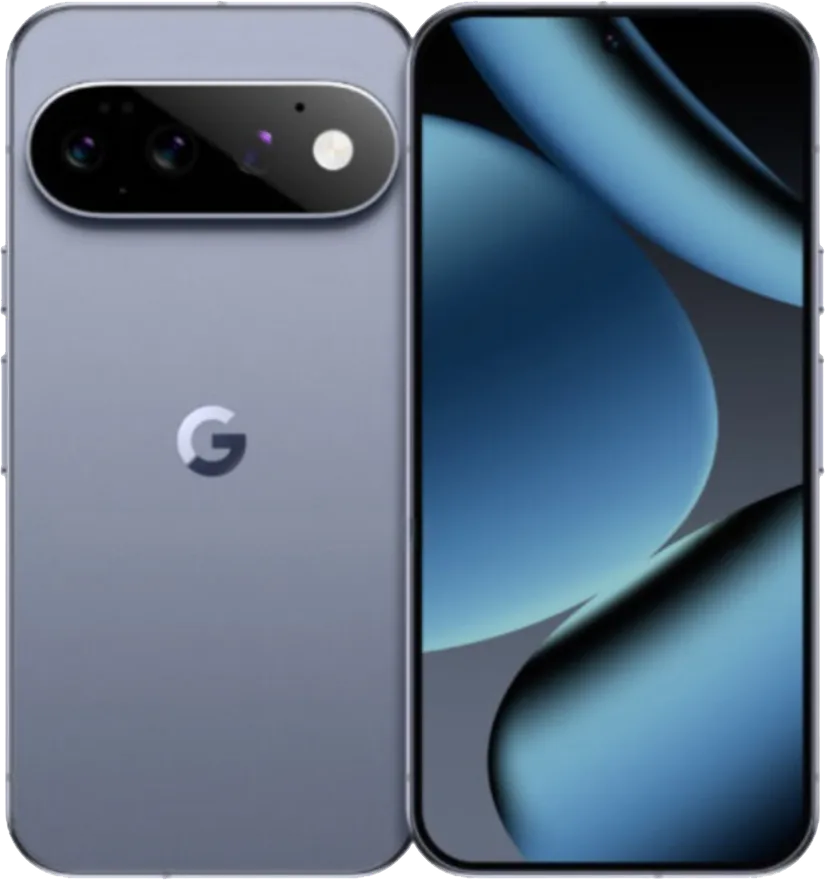
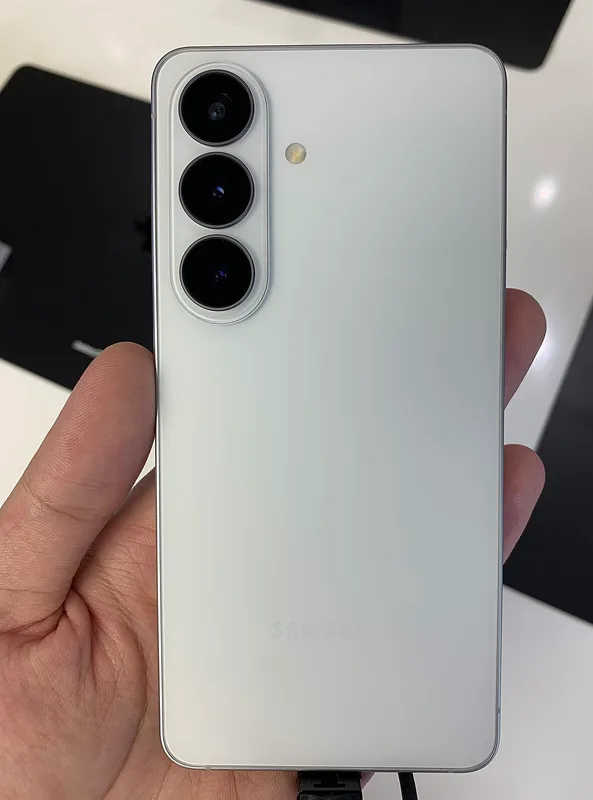
Not everyone wants a 6.9-inch phone. The Google Pixel 11 Pro and Samsung Galaxy S26 are for people who want flagship performance in a phone they can comfortably use with one hand. Both have 6.3-inch displays. Both are genuine flagships. But they take very different approaches to what a compact phone should be.
Specifications at a Glance
| Spec | Pixel 11 Pro | Galaxy S26 |
|---|---|---|
| Display | 6.3" OLED, 3600 nits | 6.3" AMOLED, 2600 nits |
| Chipset | Tensor G6 (3 nm) | Exynos 2600 (2 nm) / SD 8 Elite Gen 5 |
| Main Camera | 50 MP f/1.68 (1/1.3") | 50 MP f/1.8 |
| Telephoto | 48 MP 5x periscope | 10 MP 3x telephoto |
| Battery | 4,850 mAh | 4,300 mAh |
| Charging | 30W wired | 25W wired |
| Battery charging | 30W wired, 25W wireless | 25W wired, 15W wireless |
| Weight | 204 g | 167 g |
| Thickness | 8.4 mm | 7.2 mm |
| Price | $1,099 | Not published in our sources |
Display
The Pixel 11 Pro's 3,600-nit panel is the brightest smartphone display on the market. Samsung's S26 reaches 2,600 nits, which is excellent but noticeably dimmer in direct sunlight. Both run at 120Hz with adaptive refresh rates. The Pixel has a slight resolution advantage at 495 ppi versus 411 ppi. In everyday use, both displays are excellent, but the Pixel's brightness advantage is real and visible outdoors.
Camera
The Pixel 11 Pro has the better camera system on paper and in practice. Its 50MP main sensor uses a larger 1/1.3-inch sensor than the S26's standard-sized 50MP, which means better low-light performance and more natural depth of field. The 48MP 5x periscope telephoto gives it significantly more zoom reach than the S26's 10MP 3x telephoto. And the 42MP ultrawide selfie camera is a major advantage over Samsung's 12MP.
Google's computational photography continues to lead the industry. Night Sight, Photo Unblur, and Magic Eraser are more refined than Samsung's equivalents. The Pixel produces more natural-looking images with less aggressive processing.
Performance
The Galaxy S26 ships with either the Exynos 2600 (2nm) or Snapdragon 8 Elite Gen 5 (3nm) depending on region. Both chips outperform Google's Tensor G6 in raw benchmark scores. If gaming performance matters to you, the S26 is the better choice. If AI features, speech recognition, and photo processing speed matter more, the Pixel's Tensor chip is purpose-built for those tasks.
Battery and Longevity
The Pixel's 4,850mAh battery outlasts the S26's 4,300mAh cell. Neither phone is a two-day device, but the Pixel more consistently reaches bedtime with charge to spare. Charging speed is slow on both phones. Neither will impress you if you are coming from a Chinese flagship with 100W charging.
Charging favours the Pixel slightly on both fronts: 30W wired and 25W Qi 2.2 wireless, against 25W wired and 15W wireless on the Galaxy. The Samsung does offer 4.5W reverse wireless charging, which the Pixel does not.
Google documents seven years of OS and security updates for the Pixel 11 Pro, running to 2033. Samsung has not published an equivalent commitment for the Galaxy S26 on a page we can verify, so we are not quoting a figure for it. If support length is a deciding factor, the Pixel is the only one of the two with a number you can hold the manufacturer to.
Weight and Size
The Galaxy S26 is remarkably light at 167 grams. The Pixel 11 Pro is 204 grams. That 37-gram difference is noticeable. If you want the lightest flagship experience possible, Samsung wins this category decisively.
The size gap is wider than the screen sizes suggest. The Galaxy measures 149.6 x 71.7 x 7.2 mm. The Pixel measures 152.7 x 71.9 x 8.4 mm. Samsung's phone is 3 mm shorter and 1.2 mm thinner, and combined with the weight difference it reads as a genuinely smaller object in the hand rather than a marginally smaller one.
Both use Gorilla Glass Victus 2 on the front. Samsung pairs it with a Victus 2 glass back and an aluminium frame. Google uses a matte glass back, which resists fingerprints noticeably better than Samsung's gloss finish, and carries a published IP68 rating. Samsung has not published an IP figure for the S26 on a source we can verify.
The Display, in Detail
The brightness gap is the headline, but resolution is the quieter difference. The Pixel runs 1280 x 2856 at roughly 495 pixels per inch. The Galaxy runs 1080 x 2340 at roughly 411 ppi. On 6.3-inch panels that is an 84 ppi gap, and it shows on small text and fine UI detail if you look for it.
Both are LTPO panels that drop their refresh rate when the screen is static, so battery behaviour is comparable. The Pixel adds HDR10+ support. Samsung's panel is a Dynamic AMOLED 2X, and its colour calibration out of the box is more saturated than Google's, which some people prefer and others immediately switch to a natural profile.
For outdoor use, the Pixel's 3,600-nit peak is the single most practically useful display specification in this comparison. It is a thousand nits clear of the Samsung and brighter than either of the big Ultra-class flagships.
The Rest of the Camera System
Beyond the main and telephoto lenses, the gap widens. The Pixel's ultrawide is a 48 MP f/1.7 unit covering 123 degrees with phase-detect autofocus and macro capability. Samsung's is a 12 MP f/2.2 covering 120 degrees with no autofocus and no macro mode. That is a four-fold resolution difference and a missing feature.
Selfies are no closer. Google fits a 42 MP f/2.2 ultrawide front camera with a 103-degree field of view and Dual Pixel autofocus, capable of 4K at 60fps. Samsung fits a 12 MP f/2.2 fixed-focus unit. For group shots, video calls and anything shot at arm's length, this is not a close contest.
Video is where Samsung claws something back. The Galaxy records 8K at 30fps with Horizon Lock stabilisation up to 4K, and Samsung's Super Steady mode remains one of the better electronic stabilisation implementations on Android. The Pixel also records 8K, at 24 and 30fps, but its 4K tops out at 60fps and its video processing has historically been the weakest part of the Pixel package.
The Exynos Question
The Galaxy S26 does not ship with the same chip everywhere. Most markets get the Samsung Exynos 2600, a 2 nm part with an Xclipse 960 GPU. The United States and China get the Qualcomm Snapdragon 8 Elite Gen 5, a 3 nm part with an Adreno 840.
This matters more than it should. Historically, Exynos and Snapdragon variants of the same Galaxy have differed in sustained performance, thermal behaviour and battery life, sometimes by margins large enough to change a recommendation. If you buy an S26 outside the US or China, you are buying a different phone from the one most English-language reviews tested.
The Pixel has no such split. Every Pixel 11 Pro in every market runs the same Tensor G6, which makes reviews of it more portable across regions even if the chip itself is slower in benchmarks.
Connectivity and Everyday Hardware
Both phones run Wi-Fi 7 and carry NFC, ultrasonic in-screen fingerprint readers and USB-C 3.2 ports rated at 5 Gbps. The Pixel's Wi-Fi 7 implementation is tri-band and its Bluetooth is at 6.0 with aptX HD support; Samsung's S26 is at Bluetooth 5.4, a step behind the rest of the S26 family.
Google includes Ultra Wideband on the Pixel 11 Pro. Our verified specifications for the Galaxy S26 do not list it, which is worth checking if you rely on precise device tracking or a digital car key.
Storage is 256 GB or 512 GB with 12 GB of RAM on the Galaxy, and 256 GB with 12 GB or 512 GB and 1 TB with 16 GB on the Pixel. Neither has a card slot. The Pixel is the only one of the two that reaches a terabyte.
Software
The Pixel runs Android 17 in its cleanest form, with quarterly Feature Drops that add working capability rather than rearranged menus. Call Screen, Hold For Me, Live Translate and on-device Recorder transcription all run locally, which means they work offline and nothing leaves the phone.
The Galaxy S26 ships on Android 16 with One UI 8.5 and upgrades to Android 17 with One UI 9. One UI is the more feature-dense option, with better window management, better multitasking and Samsung DeX for desktop use. It also arrives with more pre-installed software than the Pixel does.
Price and Availability
The Pixel 11 Pro is $1,099 in the United States, and that figure is published and consistent.
Samsung's pricing for the Galaxy S26 is where this comparison runs into a wall. Our sources carry two conflicting figures, $999.99 and $859.99, and we do not publish a price we cannot settle. Check Samsung's own regional store before you commit, because the gap between those two numbers is large enough to change which phone represents better value.
Which One to Buy
Buy the Pixel 11 Pro if camera quality is your top priority, you want the brightest display available, and you value long-term software support.
Buy the Galaxy S26 if you want the lightest flagship phone on the market, prefer Samsung's ecosystem, or need stronger gaming performance.