 PhoneCodex
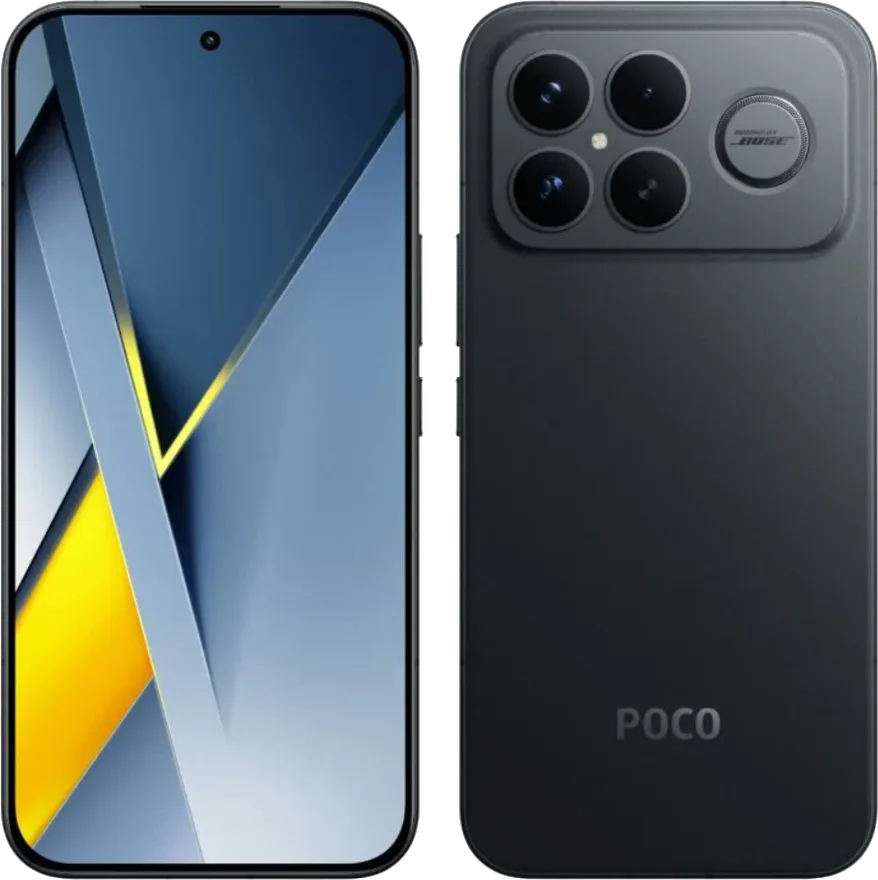
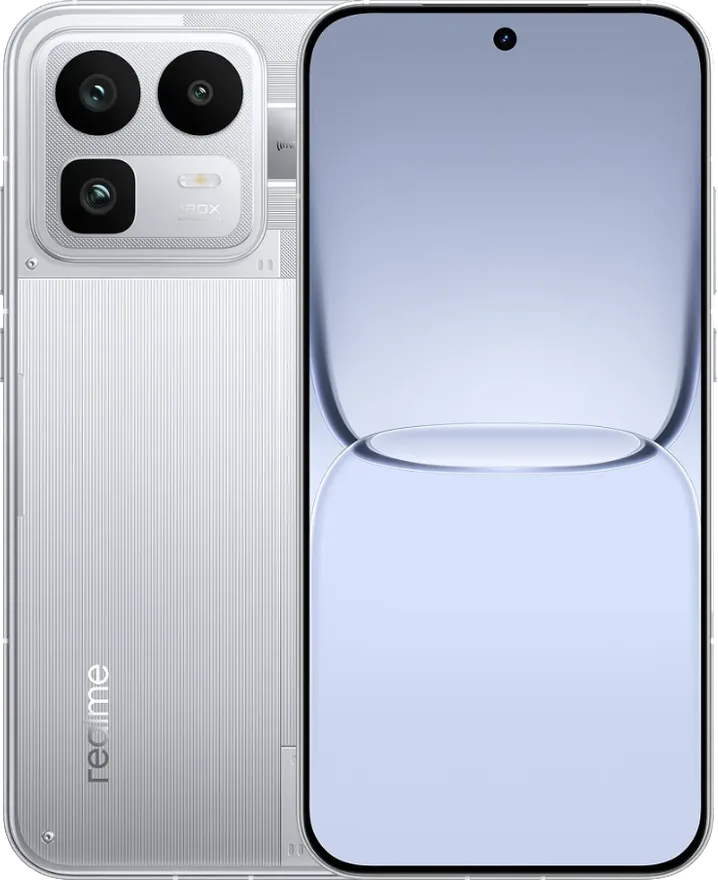
There was a time when "budget flagship" was an oxymoron. The Poco F8 Ultra and Realme Neo8 5G prove that era is over. Both run flagship Qualcomm silicon at prices that would have bought a mid-range phone two years ago. They are not, however, running the same chip, and that is the first thing worth getting straight.
The Poco F8 Ultra uses the Snapdragon 8 Elite Gen 5, the same tier of part that powers the Galaxy S26 Ultra and the Xiaomi 17 Ultra. The Realme Neo8 5G uses the Snapdragon 8 Gen 5, which sits one step below it in Qualcomm's range. Both are 3 nm chips and both share the Adreno 830 GPU, so the gap is narrower than the names suggest, but it is real.
Specifications at a Glance
| Spec | Poco F8 Ultra | Realme Neo8 5G |
|---|---|---|
| Display | 6.9" AMOLED, 3500 nits, 120Hz | 6.78" AMOLED, 6500 nits, 165Hz |
| Chipset | Snapdragon 8 Elite Gen 5 | Snapdragon 8 Gen 5 |
| Main Camera | 50 MP 1/1.31" + 5x periscope | 50 MP + 50 MP telephoto |
| Battery | 6,500 mAh | 8,000 mAh |
| Charging | 100W wired + 50W wireless | 80W wired |
| Storage | UFS 4.1 | UFS 4.0 |
| Price | $729 | ~$330 |
Display
The Realme Neo8 5G has the brighter display at a staggering 6,500 nits peak versus the Poco's 3,500 nits. It also runs at 165Hz compared to the Poco's 120Hz. For outdoor readability and smooth scrolling, the Realme has a clear advantage.
The Poco's 6.9-inch panel is larger and supports 12-bit color depth with Dolby Vision, which gives it an edge for media consumption. Both displays are excellent, but the Realme's brightness numbers are hard to ignore.
Camera
The Poco F8 Ultra has the stronger camera system. Its 50MP main sensor uses a 1/1.31-inch Light Fusion 950 sensor, which is larger and captures more light than the Realme's standard 50MP. The Poco also offers a 50MP 5x periscope telephoto, which provides significantly more zoom reach than the Realme's 50MP 2x telephoto.
The Poco has Bose-tuned stereo speakers, an IR blaster, and 960fps slow-motion video. For multimedia and photography, it is the more capable device.
Battery
The Realme Neo8 5G's 8,000mAh battery is 23% larger than the Poco's 6,500mAh. Both are enormous by conventional standards, but the Realme will outlast the Poco in any usage scenario. The Poco charges faster at 100W versus 80W and adds 50W wireless charging, which the Realme lacks entirely.
Value
Here is where the comparison gets interesting. The Realme Neo8 5G costs roughly $330 converted from its Chinese pricing. The Poco F8 Ultra costs $729 in the US. The Realme is less than half the price while offering a bigger battery, a brighter display, and the same class of Snapdragon chip.
The Poco justifies its higher price with a substantially better camera system, wireless charging, faster storage, and wider global availability. Whether those extras are worth double the price depends entirely on your priorities.
Availability is the part that is easy to overlook. The Realme Neo8 5G is a China-only release as of November 2026, and buying one elsewhere means importing it, accepting a regional warranty and checking band compatibility with your carrier. The Poco F8 Ultra has a published US price, which makes the $729 a real number rather than a converted estimate.
The Displays, Measured Properly
The brightness headline needs context. Realme quotes 6,500 nits peak, Poco quotes 3,500. Peak brightness on an OLED panel is measured on a small highlight area in HDR content, not across the full screen, so neither phone sustains those figures. Both are more than bright enough outdoors, and the Realme's advantage is real but smaller in practice than the ratio implies.
Resolution tells a different story. The Realme runs 1272 x 2772 at roughly 449 pixels per inch on a 6.78-inch panel. The Poco runs 1200 x 2608 at roughly 416 ppi on a larger 6.9-inch panel. The Realme is the sharper screen as well as the brighter one.
The Poco's counters are its LTPO layer, which lets it drop refresh rate to save power when the screen is static, plus 12-bit colour depth, Dolby Vision and HDR10+. The Realme's 165Hz panel is not LTPO, so its refresh handling is less sophisticated even though its ceiling is higher.
Cameras Beyond the Main Sensor
The Poco's full rear system is a 50 MP f/1.67 wide with a 1/1.31-inch Light Fusion 950 sensor and OIS, a 50 MP f/3.0 115mm periscope delivering 5x optical zoom with OIS, and a 50 MP f/2.4 ultrawide covering 102 degrees. Three 50 MP sensors, all useful.
The Realme pairs a 50 MP f/1.8 stabilised main camera with a 50 MP f/2.0 telephoto and an 8 MP f/2.2 ultrawide. That 8 MP ultrawide is the weak link, and it is the clearest place Realme saved money.
Selfies go to Poco as well, with a 32 MP f/2.2 front camera against the Realme's 16 MP f/2.4. Video is not close: the Poco records 8K at 30fps, 4K at 60fps and 1080p at up to 960fps for slow motion, while the Realme caps at 4K 60fps.
Charging, Durability and Extras
The Realme has the bigger cell at 8,000 mAh against 6,500 mAh, but the Poco refills faster at 100W against 80W and is the only one of the two with wireless charging, at 50W. The Poco also offers 22.5W reverse wired charging. If you charge overnight, Realme wins; if you charge in short bursts, Poco does.
Both carry serious ingress protection. The Poco is IP68. The Realme is IP68 and IP69, which adds resistance to high-pressure, high-temperature water jets.
The extras are almost entirely on the Poco side. It has Bose-tuned stereo speakers, an infrared blaster, an ultrasonic in-screen fingerprint reader rather than the Realme's optical sensor, and Bluetooth 6.0 with aptX Adaptive, LDAC and LHDC 5 codec support against the Realme's Bluetooth 5.4. Storage is UFS 4.1 with up to 512 GB and 16 GB of RAM, against UFS 4.0 with 256 GB and 12 GB.
One point in Realme's favour: its Wi-Fi 7 implementation is tri-band where the Poco's is dual-band.
Software
Both ship on Android 16. The Poco runs Poco HyperOS 3, the Realme runs Realme UI 7.0. Neither is a clean Android experience, and both arrive with a meaningful quantity of pre-installed software.
Our verified sources do not carry published update commitments for either phone, so we are not quoting figures. On phones at this price, from these brands, that is worth factoring into a long-term purchase.
What You Still Give Up Against a True Flagship
Both phones run flagship silicon, and it is tempting to conclude that the $1,300 phones are now pointless. They are not, and it is worth being specific about where the money still goes.
Software support is the largest gap. The Pixel 11 Pro carries a documented seven-year commitment and the Xiaomi 17 Ultra five years of OS updates with six of security patches. Neither the Poco nor the Realme has a published figure in our verified sources. A phone with excellent hardware and a short support window is a worse long-term purchase than its specification sheet suggests.
Image processing is the second. Both phones have capable camera hardware, and the Poco's 5x periscope is genuinely rare at this price, but neither matches the computational pipelines that Google and Apple have spent a decade refining. In good light the difference is small. In mixed indoor lighting, backlit portraits and night scenes, it is not.
Resale value is the third, and it is the one nobody budgets for. Flagship phones from Apple, Samsung and Google hold value far better than Poco or Realme devices, which narrows the real-world cost gap over a three-year ownership period more than the sticker prices imply.
Who Each Phone Is Actually For
The Poco F8 Ultra is for someone who wants a genuine flagship camera system and does not want to spend flagship money. Three 50 MP sensors including a 5x periscope, 8K video, wireless charging, an ultrasonic fingerprint reader, Bose-tuned speakers and an IR blaster add up to a phone that gives up remarkably little. It has a published US price, which also means you can actually buy it.
The Realme Neo8 5G is for someone optimising purely for cost per unit of capability. An 8,000 mAh battery, a 165Hz 6,500-nit display and flagship-class Qualcomm silicon for roughly $330 is a combination nothing else matches. The ultrawide camera is weak, the selfie camera is weaker, there is no wireless charging, and as of November 2026 it is a China-only release. If you are comfortable importing, none of those may bother you.
Related Reading
Our Nothing Phone (4a) review covers the step below this bracket, where a periscope telephoto costs $349. If you are weighing a true flagship instead, the Pixel 11 Pro review explains what the extra money actually buys, and our Tecno Camon 50 Ultra versus Infinix Note 60 Ultra comparison looks at the tier below.
Which One to Buy
Buy the Poco F8 Ultra if camera quality, wireless charging, and the 5x periscope telephoto matter to you. It is the more complete phone at a price that is still reasonable by flagship standards.
Buy the Realme Neo8 5G if you want the best value in the smartphone market, period. Flagship processing, an 8,000mAh battery, and a 6,500-nit display for $330 is absurd value that nothing else matches.