 PhoneCodex
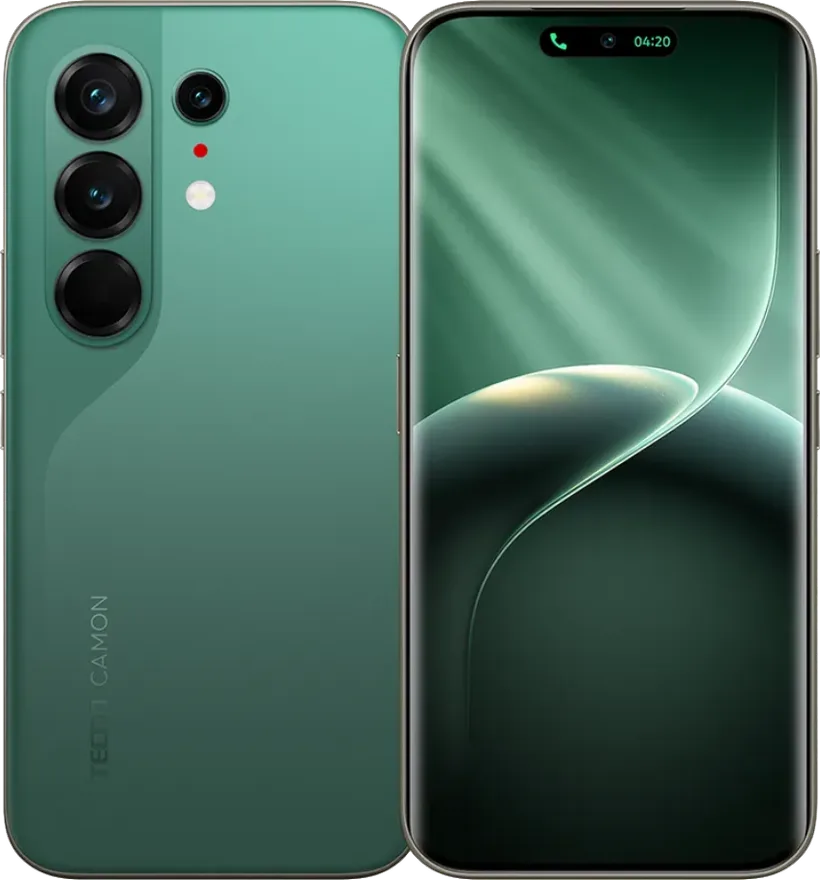
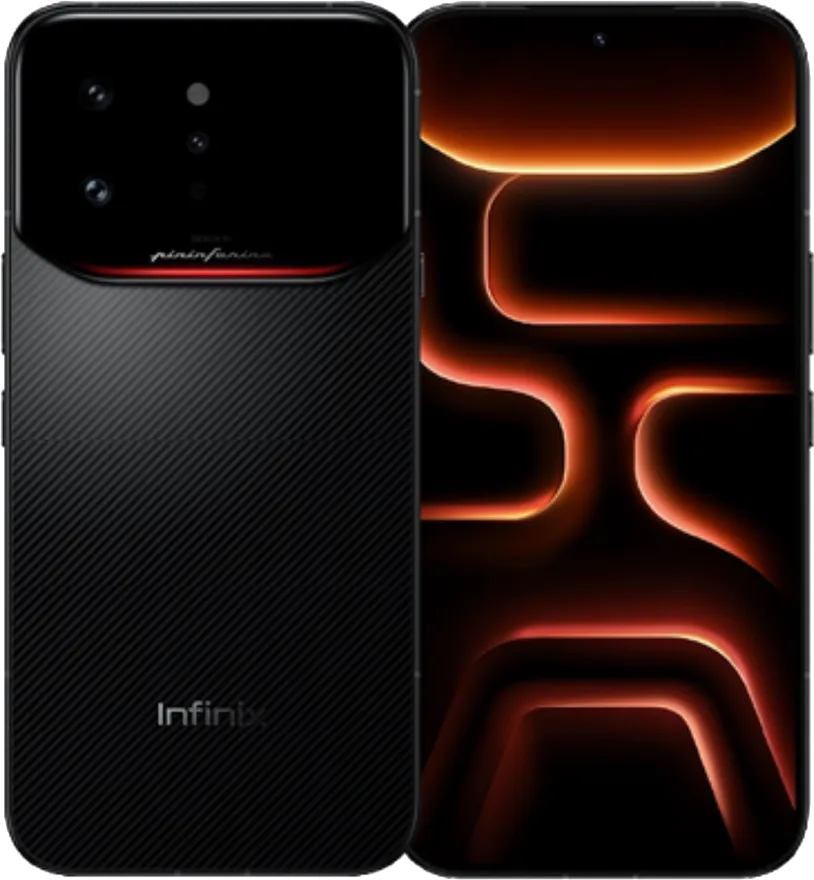
Tecno and Infinix are both owned by Transsion Holdings, but they target slightly different audiences. The Camon 50 Ultra 5G is Tecno's camera-focused flagship. The Note 60 Ultra 5G is Infinix's feature-loaded showpiece. Both cost under $500 and both pack impressive specs for the price. The question is which one delivers more where it counts.
Specifications at a Glance
| Spec | Camon 50 Ultra 5G | Note 60 Ultra 5G |
|---|---|---|
| Display | 6.78" AMOLED, 1400 nits, 144Hz | 6.78" AMOLED, 4500 nits, 144Hz |
| Chipset | Dimensity 7400 Ultimate | Dimensity 8400 Ultimate |
| Main Camera | 50 MP f/1.6 | 200 MP f/1.65 |
| Battery | 6,500 mAh | 7,000 mAh |
| Charging | 45W wired | 100W wired + 50W wireless |
| Weight | 178 g | 220 g |
| Special | IP69K, 50 MP selfie | Pininfarina design, satellite messaging |
Display
Both phones have 6.78-inch AMOLED panels running at 144Hz, but the Infinix Note 60 Ultra crushes the Tecno on brightness. Its 4,500-nit peak is more than triple the Camon 50 Ultra's 1,400 nits. For outdoor use, the difference is dramatic. The Infinix also uses Gorilla Glass 7i versus the Tecno's Gorilla Glass 5, providing better scratch and drop protection.
Camera
The Infinix leads with a 200MP main sensor versus Tecno's 50MP. In good light, the 200MP sensor captures significantly more detail, especially when cropping. Both phones have 50MP telephoto cameras with 2x optical zoom and 8MP ultrawide cameras.
The Tecno fights back with a 50MP selfie camera, which is better than the Infinix's 32MP front camera. For selfie-focused users, Tecno has the advantage. For everything else, Infinix's 200MP main sensor leads.
Performance
The Infinix uses the Dimensity 8400 Ultimate, which is a step above the Tecno's Dimensity 7400 Ultimate. The 8400 has a more powerful CPU architecture and a better GPU, which translates to smoother gaming and faster app performance. Both chips handle everyday tasks without issue, but the Infinix has more headroom for demanding applications.
Battery and Charging
The Infinix wins battery and charging across the board. Its 7,000mAh battery is larger than the Tecno's 6,500mAh. Its 100W wired charging is more than double the Tecno's 45W. And it adds 50W wireless charging, which the Tecno lacks entirely. The charging speed difference is particularly significant. The Infinix will go from empty to full in about 40 minutes. The Tecno takes nearly two hours.
Design and Build
The Tecno Camon 50 Ultra weighs just 178 grams, which is remarkably light for a phone with a 6,500mAh battery. The Infinix Note 60 Ultra weighs 220 grams, a 42-gram difference that is noticeable in daily use. The Tecno also has IP69K water resistance, the highest available.
The Infinix counters with a Pininfarina co-designed body and satellite messaging capability, both unusual features at this price point. The design collaboration gives the Infinix a more premium look and feel.
Water resistance, though, goes decisively the other way, and the table above undersells it. The Tecno carries an IP69K rating, which covers high-pressure, high-temperature water jets and is the toughest ingress standard applied to phones. The Infinix carries IP65, which covers low-pressure jets and dust but not immersion. On paper that is two very different levels of protection, and it is the single biggest durability difference between them.
The dimensions are close: 162.4 x 74.8 x 7.6 mm for the Tecno, 163.2 x 77.4 x 7.9 mm for the Infinix. The Tecno is narrower by 2.6 mm, which combined with the 42-gram weight difference makes it meaningfully easier to hold.
The Chipsets Compared Properly
Both chips are 4 nm MediaTek parts, but they are a generation apart in CPU design. The Tecno's Dimensity 7400 Ultimate uses four Cortex-A78 cores at 2.8 GHz and four Cortex-A55 cores at 2.0 GHz, with a Mali-G610 MC4 GPU. The A78 and A55 are older Arm designs that have been in service for several years.
The Infinix's Dimensity 8400 Ultimate uses one Cortex-A725 at 3.25 GHz, three more A725 cores at 3.0 GHz and four Cortex-A520 cores at 2.1 GHz, with a Mali-G720 MC6 GPU. Newer core designs, higher clocks and a six-core GPU against a four-core one.
In daily use both phones feel responsive. The gap appears in gaming, in sustained workloads and in how long each phone will feel current. If you intend to keep the phone for three years or more, the Infinix has considerably more headroom.
Storage is UFS 3.1 on both, which is the one place each brand has clearly economised. Neither matches the UFS 4.x speeds found on the Poco and Realme devices a tier above.
Display Detail
Both panels are 6.78-inch AMOLEDs running 1208 x 2644 at roughly 428 pixels per inch with a 144Hz refresh rate. The resolutions are identical, so sharpness is a draw.
Brightness is not. The Infinix peaks at 4,500 nits against the Tecno's 1,400. In direct sunlight the Tecno is usable but requires effort; the Infinix is simply readable. Of every specification on this page, this is the one most likely to affect your day.
Protection differs too. The Infinix uses Gorilla Glass 7i, the Tecno uses Gorilla Glass 5, a considerably older formulation. Set against the Tecno's far better IP rating, the two phones trade durability advantages rather than one winning outright.
Cameras and Video
Beyond the headline sensors, the systems are nearly identical. Both pair their main camera with a 50 MP f/2.0 50mm telephoto offering 2x optical zoom and an 8 MP f/2.2 ultrawide. Both record 4K at 30fps and 1080p at 60fps, with no 4K 60 option on either.
So the comparison really comes down to the main sensor and the front camera. The Infinix's 200 MP f/1.65 with OIS captures more detail and gives you far more room to crop. The Tecno's 50 MP f/1.6 with OIS has a marginally wider aperture and produces cleaner pixel-binned output, but it cannot match the Infinix for resolution.
On the front, the Tecno's 50 MP autofocus selfie camera comfortably beats the Infinix's 32 MP autofocus unit. Both having autofocus at all is unusual at this price and worth noting.
Connectivity and Unusual Extras
Neither phone is strong here. Both cap at Wi-Fi 6 rather than Wi-Fi 7, and both use USB-C 2.0 ports, which means file transfers run at USB 2.0 speeds. On a phone with a 200 MP camera, moving a large photo library to a computer over that port is genuinely slow.
Bluetooth is 5.4 on the Infinix and 5.3 on the Tecno. Both have NFC and optical in-display fingerprint readers rather than ultrasonic ones.
The Infinix adds two things you rarely see at this price: satellite messaging, which works where there is no cellular coverage, and heart rate plus blood oxygen sensors built into the phone itself. Whether you will use either is a personal question, but they are genuine hardware additions rather than software features.
Price and Value
The Tecno Camon 50 Ultra 5G is $449 for the 256 GB model, with 8 GB or 12 GB RAM options and a 512 GB tier above it.
The Infinix Note 60 Ultra 5G launched at 32,999 Philippine pesos, which converts to roughly $565, in 256 GB and 512 GB configurations with 12 GB of RAM.
That is a gap of about $115, and the Infinix uses it well: a better chipset, a far brighter display, a 200 MP main camera, a larger battery, more than twice the charging speed, wireless charging and satellite messaging. The Tecno's answer is a lighter, narrower body, a better selfie camera and a far more serious water resistance rating, for less money.
Who Each Phone Is Actually For
The Tecno Camon 50 Ultra 5G is for someone who handles their phone roughly and wants it to survive. The IP69K rating is not a marketing number; it means the phone is sealed against pressure washing. Combine that with a 178-gram body that is the lightest here by 42 grams, a 50 MP autofocus selfie camera and a $449 price, and you have a phone built for people who work outdoors or travel light.
The Infinix Note 60 Ultra 5G is for someone who wants the most hardware their money can buy and will treat the phone carefully. The brighter display, newer chipset, 200 MP camera, larger battery, 100W charging, wireless charging and satellite messaging are a genuinely long list of advantages for roughly $115 more. The IP65 rating is the trade, and it is a real one.
Put plainly: if the phone is going to get wet, buy the Tecno. If it is going to get used hard but kept dry, buy the Infinix.
What Both Phones Compromise
It is worth naming the shared weaknesses, because they are the same on both devices and they are easy to miss when comparing two phones against each other rather than against the wider market.
Storage is UFS 3.1 on both, a generation behind the UFS 4.x used by phones one tier up. App installs and large file operations are noticeably slower. Wi-Fi caps at Wi-Fi 6 on both, with no Wi-Fi 7 support. The USB-C ports on both run at USB 2.0 speeds, which makes wired transfers slow on a phone shooting 200 MP stills.
Video is limited to 4K 30fps and 1080p 60fps on both. Neither offers 4K 60, which has been standard on flagships for years. And both use optical in-display fingerprint readers rather than ultrasonic ones, so expect slower and less reliable unlocks with damp fingers.
Related Reading
If your budget stretches further, our Poco F8 Ultra versus Realme Neo8 comparison covers the next tier up, where flagship Qualcomm silicon and UFS 4.x storage enter the picture. Our Nothing Phone (4a) review looks at a $349 alternative with a periscope telephoto, which neither phone here offers.
Which One to Buy
Buy the Tecno Camon 50 Ultra 5G if you want the lightest phone in this comparison, the best selfie camera, and IP69K water resistance. It is the better pocket-friendly option.
Buy the Infinix Note 60 Ultra 5G if you want the best specs across the board: a brighter display, a 200MP camera, a bigger battery, faster charging, wireless charging, satellite messaging, and a stronger chipset. It costs a bit more but delivers substantially more hardware for the money.