 PhoneCodex
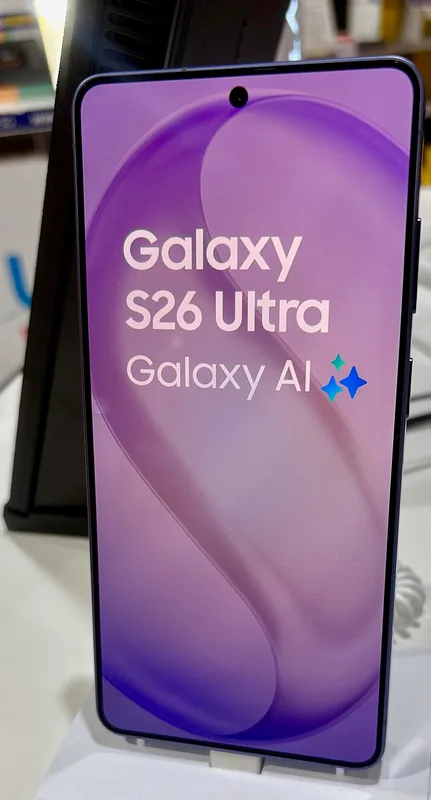
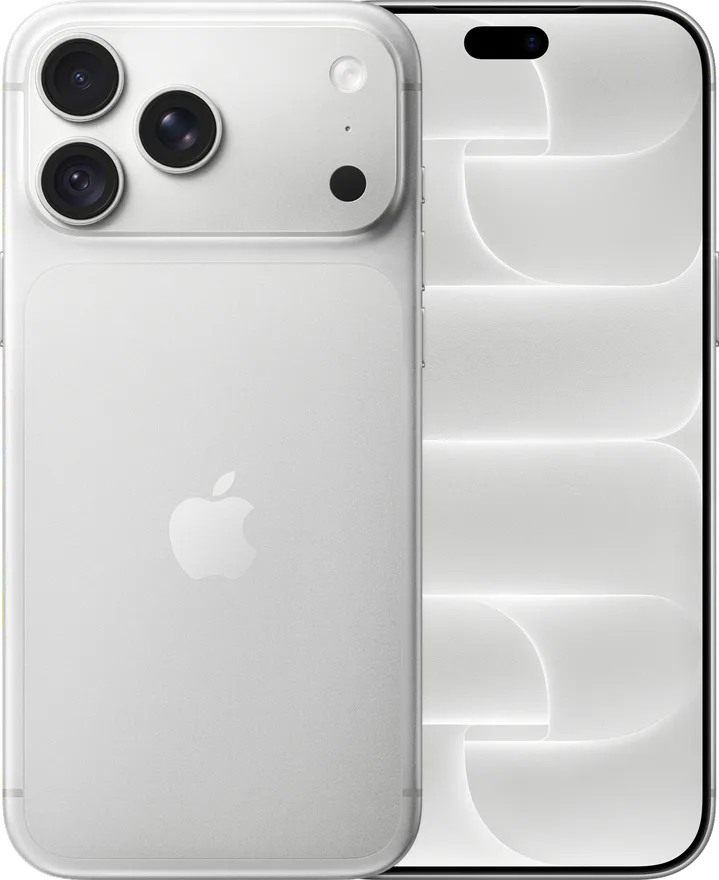
This is the comparison that matters most every year. Samsung's Galaxy S26 Ultra and Apple's iPhone 18 Pro Max are the phones that set the standard for everyone else. They are the most expensive, most capable, and most scrutinized devices in the market. In 2026, both have genuine headlining features that the other lacks.
Specifications at a Glance
| Spec | Galaxy S26 Ultra | iPhone 18 Pro Max |
|---|---|---|
| Display | 6.9" AMOLED, 2600 nits | 6.9" OLED, 3000 nits |
| Chipset | Snapdragon 8 Elite Gen 5 (3 nm) | A20 Pro (2 nm) |
| Main Camera | 200 MP f/1.4 | 48 MP f/1.48-4.0 variable |
| Telephoto | 50 MP 5x periscope | 48 MP 4x tetraprism |
| Battery | 5,000 mAh | 5,567 mAh |
| Charging | 60W wired | 60W wired |
| Storage | Up to 1 TB | Up to 2 TB |
| Weight | 214 g | 249 g |
| Price | $1,399.99 | $1,299 |
Display
Both phones use 6.9-inch OLED panels with 120Hz refresh rates, but Apple's display is brighter at 3,000 nits versus Samsung's 2,600 nits. In direct sunlight, the iPhone has a slight edge in readability. Samsung counters with its Privacy Display feature, which narrows the viewing angle to prevent people nearby from seeing your screen. Neither phone has a bad display. The choice comes down to whether you value raw brightness or privacy technology.
Camera
This is where the two phones diverge most. Samsung puts its money on resolution and aperture: the 200MP sensor captures extraordinary detail, and the f/1.4 aperture pulls in more light than any competing flagship. Apple's approach is different. The 48MP variable aperture camera switches between f/1.48 and f/4.0, giving photographers control over depth of field that Samsung's fixed aperture cannot match.
In daylight, both phones produce excellent images. Samsung's shots have more detail when you zoom in to 100%, while Apple's color processing produces slightly more natural-looking skin tones. In low light, Samsung's wider fixed aperture gives it a consistent advantage. For portraits, Apple's variable aperture provides more creative control.
Samsung wins the telephoto battle with a 5x periscope versus Apple's 4x tetraprism. The extra zoom makes a noticeable difference when shooting distant subjects.
Performance
Apple's A20 Pro on 2nm is technically the more advanced chip, and it leads in single-threaded performance benchmarks. Qualcomm's Snapdragon 8 Elite Gen 5 on 3nm is competitive in multi-threaded workloads and runs the more open Android ecosystem. In everyday use, neither phone will ever feel slow. The performance difference only matters for sustained gaming or heavy video editing, where the A20 Pro's efficiency gives it an edge in sustained performance.
Battery and Charging
Apple's 5,567mAh battery is larger than Samsung's 5,000mAh, and combined with the 2nm chip's efficiency, the iPhone 18 Pro Max is the longer-lasting phone of the two. Apple quotes up to 45 hours of video playback. Both phones charge at the same 60W maximum speed, and Samsung's 25W wireless charging matches Apple's 25W MagSafe and Qi2.
One caveat on the Apple figure: the company does not publish milliamp-hour ratings. The 5,567 mAh number applies to the eSIM model, which is the only version sold in the United States, and it comes from regulatory documentation rather than Apple's own specification page.
Samsung adds 4.5W reverse wireless charging, which lets the phone top up earbuds or a watch from its own cell. Apple does not offer an equivalent. It is a minor feature, but it is the kind of thing that saves a trip to a charger once or twice a month.
Weight and Build
The Galaxy S26 Ultra weighs 214 grams. The iPhone 18 Pro Max weighs 249 grams. That is a 35-gram difference, and you feel it. The Samsung phone is noticeably lighter in the hand, which matters during extended one-handed use. Both phones feel premium and well-built.
The dimensions are closer than the weights suggest. Samsung measures 163.6 x 78.1 x 7.9 mm; Apple measures 163.4 x 78.0 x 8.75 mm. They occupy almost exactly the same footprint in a pocket, but the iPhone is nearly a millimetre thicker and significantly denser.
Materials differ in approach. Samsung uses Gorilla Armor 2 on both the front and the back, a material notable for how much it cuts reflections under overhead lighting. Apple uses an aluminium unibody with Ceramic Shield 2 on the front and back. Apple's phone carries a published IP68 rating certified to six metres for thirty minutes, which is unusually deep. Samsung has not published an IP figure for the S26 Ultra on any specification page we can verify, so we are not quoting one.
The Ultrawide and Selfie Cameras
The main and telephoto cameras get all the attention, but the supporting lenses are where these two phones diverge in a way that affects ordinary use.
Samsung's ultrawide is a 50 MP sensor covering 120 degrees. Apple's is a 48 MP unit at a 13mm equivalent, also covering 120 degrees. Resolution favours Samsung on paper, but Apple's ultrawide has Hybrid Focus Pixels and doubles as the macro camera, which makes it the more versatile of the two in practice.
Selfies are a clearer win for Apple. The iPhone has an 18 MP f/1.9 front camera with autofocus driven by Focus Pixels, plus Center Stage framing. Samsung uses a 12 MP f/2.2 fixed-focus unit. Autofocus on a front camera is not a specification most people check, and it is the single biggest reason iPhone selfies hold detail at arm's length where the Galaxy softens.
Samsung's third rear camera, the 10 MP f/2.4 3x telephoto, has no equivalent on the iPhone at all. It fills the gap between 1x and 5x that Apple covers with cropping, and for portrait-distance work it is genuinely useful.
Video Recording
Samsung records 8K at 30fps, with Horizon Lock stabilisation available up to 4K. The ProVisual Engine handles processing, and Space Zoom reaches 100x for stills.
Apple does not offer 8K, and it does not need to. The iPhone records 4K Dolby Vision at 24, 25, 30, 60, 100 and 120fps, captures ProRes up to 4K at 120fps directly to internal storage, and runs Cinematic mode at 4K 60fps. For anyone editing footage afterwards, the frame rate options, the colour pipeline and the ProRes support matter far more than a resolution number almost nobody delivers in.
If you shoot video seriously, this section decides the comparison on its own. The iPhone is the better video camera by a wide margin, and it has been for several generations.
Connectivity and Everyday Extras
Both phones run Wi-Fi 7 and Bluetooth 6.0, and both include Ultra Wideband and NFC. The difference is in the wired port. Samsung's USB-C runs at USB 3.2 speeds rated 5 Gbps. Apple's runs USB 3 at 10 Gbps with DisplayPort output. If you offload large video files to a computer, Apple's port is twice as fast.
Apple adds satellite connectivity for Emergency SOS, Messages and Find My, plus Thread networking for smart home devices and a LiDAR scanner that assists autofocus and depth mapping in low light. Samsung has no equivalent to any of those.
Samsung's counters are an ultrasonic in-screen fingerprint reader, which is faster and far more tolerant of wet fingers than Apple's Face ID is of masks and awkward angles, and Samsung DeX, which turns the phone into a desktop workstation when connected to a monitor. Nothing on the iPhone does what DeX does.
Software and Long-Term Support
The Galaxy S26 Ultra ships on Android 16 with One UI 8.5 and upgrades to Android 17 with One UI 9. The iPhone 18 Pro Max ships on iOS 27.
One UI is the most capable Android skin for multitasking and window management, and it is the only one with a genuinely usable desktop mode. It also arrives with a meaningful quantity of pre-installed software, much of it duplicating what Google already supplies. iOS ships with less and offers less: no equivalent to DeX, less flexible default-app handling, and a stricter sideloading position in most regions.
The honest framing is that Samsung gives you more control and more clutter, while Apple gives you less of both. Which one you prefer is a question about temperament rather than specifications.
Price and Storage Tiers
The Galaxy S26 Ultra launched at $1,299.99 and now carries a $1,399.99 US list price for 256 GB. Storage climbs to 512 GB and 1 TB, with RAM going from 12 GB to 16 GB on the top tier.
The iPhone 18 Pro Max starts at $1,299 for 256 GB and climbs through 512 GB and 1 TB to 2 TB, with 12 GB of RAM on every configuration. The 2 TB option has no equivalent on the Samsung side.
For the first time in recent memory, the Pro Max is the cheaper flagship at the entry tier. If storage ceiling matters to you, Apple is also the only one of the two that can go to 2 TB.
Which One to Buy
Buy the Galaxy S26 Ultra if you want the best low-light camera, the Privacy Display feature, a lighter phone, and the flexibility of Android.
Buy the iPhone 18 Pro Max if you want variable aperture photography, longer battery life, the Apple ecosystem, and the best video recording on any phone.
Both are excellent. Neither is wrong. The choice is between two different philosophies of what a flagship phone should prioritize.