 PhoneCodex
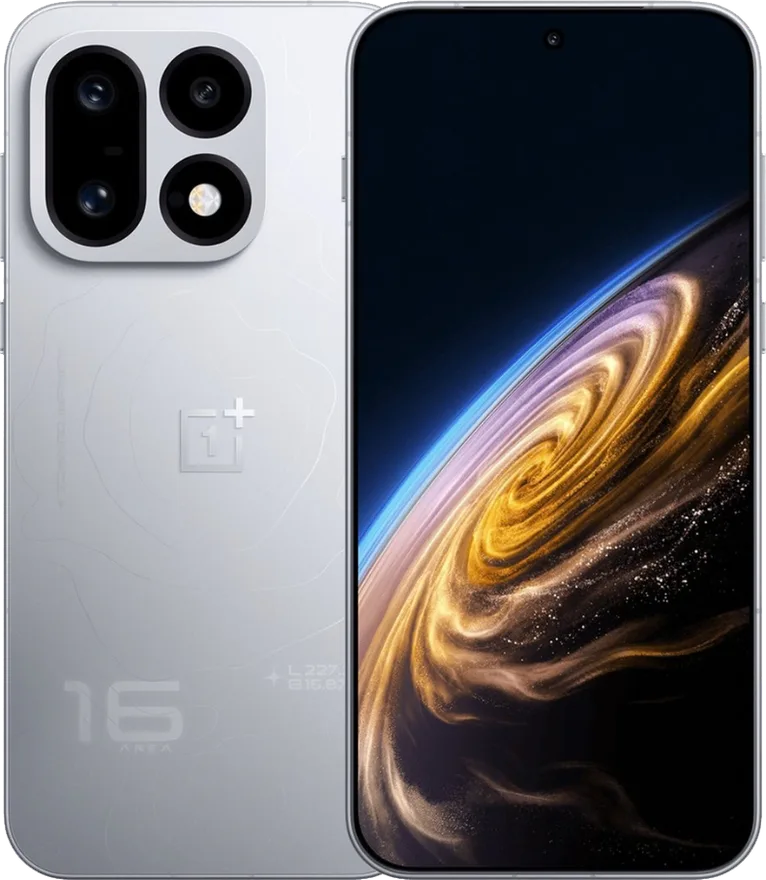
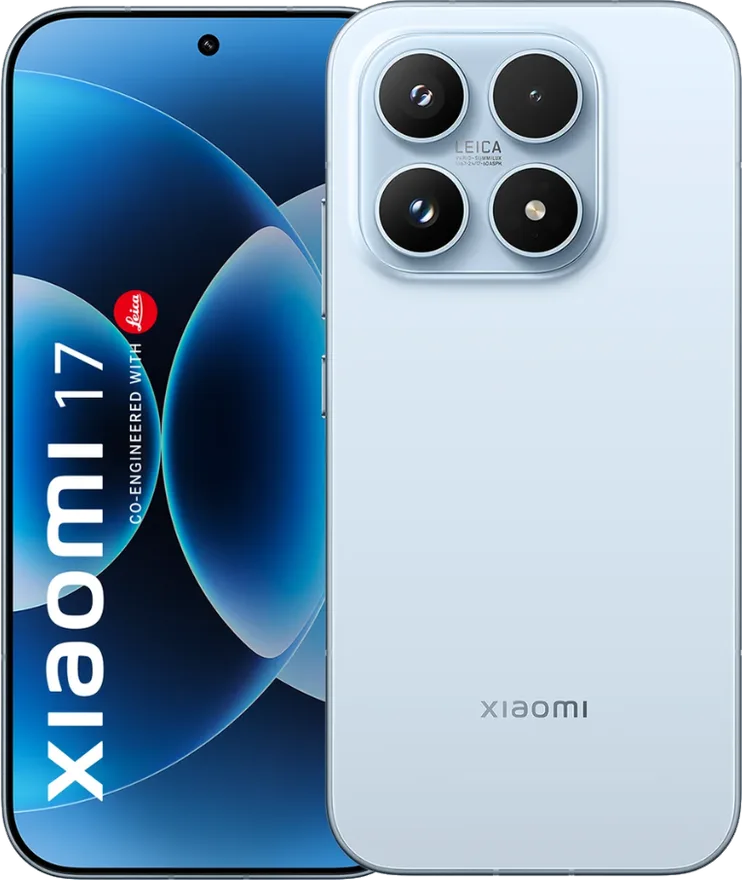
OnePlus and Xiaomi are the two most aggressive players in the Chinese flagship market, and their 2026 flagships take distinctly different approaches. The OnePlus 16 goes all-in on battery life and processing power with a 9,000mAh cell and a 2nm chip. The Xiaomi 17 bets on camera quality and compactness with triple Leica lenses in a 6.3-inch body. Both phones deliver extraordinary value.
Specifications at a Glance
| Spec | OnePlus 16 | Xiaomi 17 |
|---|---|---|
| Display | 6.78" AMOLED, 185Hz | 6.3" OLED, 120Hz |
| Chipset | SD 8 Elite Extreme Gen 6 (2 nm) | SD 8 Elite Gen 5 (3 nm) |
| Main Camera | 200 MP f/1.6 | 50 MP f/1.67 1/1.31" Leica |
| Telephoto | 50 MP 3.5x periscope | 50 MP 2.6x Leica |
| Battery | 9,000 mAh | 6,330 mAh |
| Charging | 100W wired | 100W wired |
| Storage | UFS 5.0 | UFS 4.1 |
| Weight | 217 g | 191 g |
Size and Design
The Xiaomi 17 is a compact flagship at 6.3 inches and 191 grams. The OnePlus 16 is a standard-sized phone at 6.78 inches and 217 grams. If you want a phone that disappears in your pocket and feels light in hand, the Xiaomi 17 is the clear choice. If you prefer a larger screen for media consumption and gaming, the OnePlus 16 has the advantage.
Camera
On paper, the OnePlus 16 has the higher resolution main camera at 200MP. In practice, the Xiaomi 17's 50MP sensor with a 1/1.31-inch size captures better images in most conditions. The larger sensor gathers more light per pixel, and Leica's color science produces more natural, film-like images that look better straight out of the camera.
Both phones have 50MP telephoto cameras, but the OnePlus reaches 3.5x while the Xiaomi tops out at 2.6x. For zoom, OnePlus wins. For overall image quality and color accuracy, Xiaomi wins. The Xiaomi 17 also records 8K video with Dolby Vision support and has an IR blaster.
Battery and Performance
The OnePlus 16's 9,000mAh battery is 42% larger than the Xiaomi 17's 6,330mAh. This is a massive difference in real-world endurance. The OnePlus 16 is a comfortable two-day phone. The Xiaomi 17 is a reliable one-day phone with some to spare. Both charge at 100W wired and 50W wireless.
The OnePlus 16's Snapdragon 8 Elite Extreme Gen 6 on 2nm is technically the more advanced chip, with higher benchmark scores and better power efficiency than the Xiaomi 17's Snapdragon 8 Elite Gen 5 on 3nm. The OnePlus also uses faster UFS 5.0 storage against the Xiaomi's UFS 4.1, and pairs its chip with an Adreno 860 GPU where Xiaomi uses the Adreno 840.
There is a practical footnote to the battery comparison. A larger cell needs a larger internal volume, and a larger internal volume disperses heat better. The OnePlus is therefore the better sustained-performance phone as well as the longer-lasting one, which is why its lead in gaming is wider than the benchmark gap alone suggests.
Charging is closer than it looks. Both reach 100W wired and 50W wireless. The difference is what they are filling: the OnePlus moves 9,000 mAh in roughly 40 minutes, the Xiaomi moves 6,330 mAh in less. Xiaomi adds 22.5W reverse wired charging, which is considerably more useful than the token 5W figures most phones offer.
The Display Trade-Off
These two panels are built for different people. The OnePlus runs 6.78 inches at 1272 x 2772, roughly 450 pixels per inch, with an LTPO layer, HDR10+ and Dolby Vision, and a 185Hz ceiling. The Xiaomi runs 6.3 inches at 1220 x 2656, roughly 460 ppi, with LTPO and a 3,500-nit peak.
Sharpness is effectively a draw. Brightness goes to Xiaomi, and 3,500 nits is a meaningful outdoor advantage. Refresh rate goes decisively to OnePlus, though 185Hz is a luxury rather than a necessity once you are past 120Hz.
The real decision is size. At 6.3 inches and 191 grams the Xiaomi 17 is one of the few genuinely compact flagships left, while the OnePlus is a full-size phone with a battery to match. No specification in this comparison matters more than whether you want to use your phone one-handed.
Ultrawide, Selfie and Video
The supporting cameras are closer than the main sensors. OnePlus fits a 50 MP f/2.0 ultrawide at a 15mm equivalent. Xiaomi fits a 50 MP f/2.4 at 17mm covering 102 degrees. The OnePlus lens is wider and faster; the Xiaomi benefits from Leica's tuning. Both are a clear step above the 8 MP ultrawides still common one tier down.
Front cameras are both 50 MP. The OnePlus unit is f/2.0 with autofocus, the Xiaomi f/2.2 at a 21mm equivalent. Autofocus gives OnePlus the edge for close-range selfies and video calls.
Video favours OnePlus more clearly. Both record 8K at 30fps, but the OnePlus adds 4K at 120fps and 1080p at 240fps with gyroscope-assisted stabilisation, where the Xiaomi caps at 4K 60fps. Xiaomi's counter is Dolby Vision capture, which matters if you watch your footage back on compatible hardware.
Durability and Connectivity
The OnePlus 16 carries IP68 and IP69K ratings. The Xiaomi 17 carries IP68 and IP69. Both are built to a standard well beyond what the category required two years ago, and the practical difference between them is negligible.
Wireless is a split decision. OnePlus runs tri-band Wi-Fi 7 with Bluetooth 5.4 supporting aptX HD and LHDC 5. Xiaomi runs dual-band Wi-Fi 7 with Bluetooth 6.0. If you own high-bitrate wireless headphones, check which codec they use before choosing.
Xiaomi adds two things the OnePlus lacks: an infrared blaster for controlling televisions and air conditioners, and DisplayPort output over its USB-C 3.2 Gen 1 port for driving an external monitor. Both phones have ultrasonic in-screen fingerprint readers and NFC.
Software and Support
The OnePlus 16 ships with OxygenOS 17 on Android 17, which is the newer base. The Xiaomi 17 ships with HyperOS 3 on Android 16.
OxygenOS is the lighter and cleaner of the two, with fewer pre-installed applications and fewer prompts. HyperOS 3 is faster than its reputation suggests but busier, and the first hour of ownership involves removing software you did not ask for.
Support length is where Xiaomi pulls ahead decisively. Xiaomi commits to five years of OS updates and six years of security patches for the 17. Our verified sources do not carry an equivalent published commitment for the OnePlus 16, so we are not quoting one. For a phone you intend to keep, that is a real difference.
Price and Availability
The OnePlus 16 launched in China at 5,999 yuan, roughly $830 converted. The Xiaomi 17 launched globally and in India at 68,999 rupees, roughly $780 converted.
Availability is the more important half of that sentence. The Xiaomi 17 had a global and Indian release in March 2026 and is a phone you can buy through normal channels with a local warranty. The OnePlus 16 is a China-first launch with an Indian release expected later in 2026 and broader international availability unconfirmed.
So the Xiaomi is the cheaper phone, the more widely available phone and the better-supported phone. The OnePlus is the faster phone with nearly 50 percent more battery. That is the trade in one sentence.
Who Each Phone Is Actually For
The OnePlus 16 is for people whose phone is a tool they lean on hard. Long days away from a charger, long gaming sessions, heavy camera use, a lot of video. The 9,000 mAh cell and the 2 nm chip are not specifications you admire on a page; they are specifications you notice at 9pm on a Thursday when the phone is still at 40 percent. Accept that you may be importing it and that software support is undocumented.
The Xiaomi 17 is for people who have decided that a phone should be small. That decision rules out most of the 2026 flagship market, and among the handful of compact phones left, the Xiaomi has the best camera hardware and a genuinely competitive battery at 6,330 mAh. Five years of OS updates and six of security patches mean you can keep it long enough to justify the choice.
If you cannot decide, the question to ask is not which phone is better. It is whether you have ever put a phone down because it was too big to use comfortably. If the answer is yes, buy the Xiaomi. If it is no, buy the OnePlus.
Related Reading
Our full OnePlus 16 review covers the endurance claims in more depth, and the Xiaomi 17 Ultra review explains what another several hundred dollars buys you in camera hardware from the same manufacturer. If global availability and support matter more to you than raw specifications, our Galaxy S26 Ultra versus iPhone 18 Pro Max comparison covers the two phones you can buy anywhere.
Which One to Buy
Buy the OnePlus 16 if battery life is a priority, you want the fastest chip available, or you prefer a larger display. It is the endurance champion.
Buy the Xiaomi 17 if you want the best camera at this price, prefer a compact phone, or appreciate Leica's color science. It is the photographer's choice.