 PhoneCodex
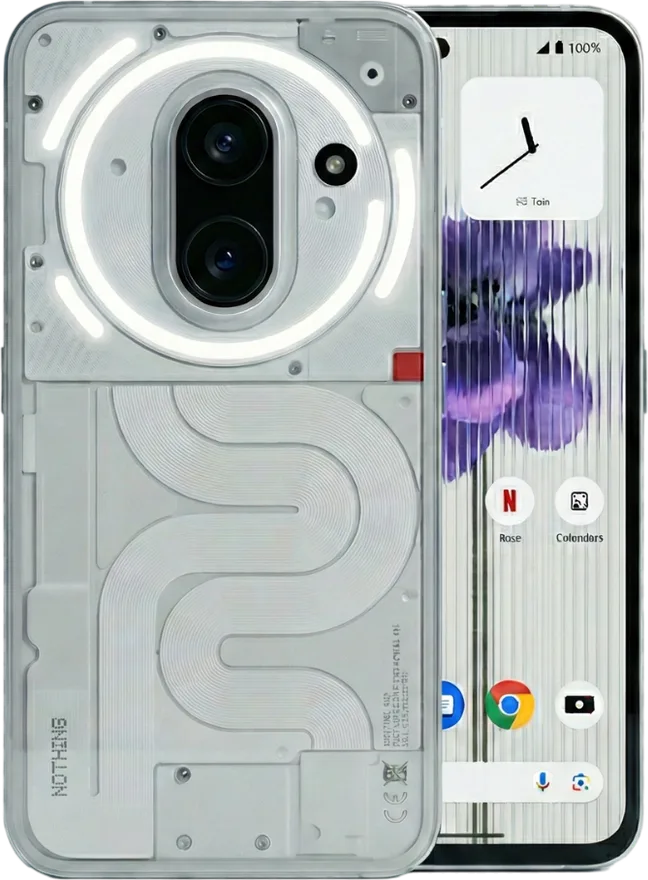
Nothing has a habit of making phones that punch above their weight. The Phone (4a) might be the company's best example yet. At $349, you get a periscope telephoto camera, a 4,500-nit display, and the Glyph Bar notification system that gives Nothing phones their distinctive identity. Those are features that did not exist at this price point a year ago.
Display
The 6.78-inch AMOLED panel is shockingly good for $349. The 4,500-nit peak brightness exceeds what many phones twice the price can achieve. The 120Hz refresh rate is smooth, the 1224x2720 resolution keeps everything sharp, and Gorilla Glass 7i protects the surface from scratches and drops.
Nothing has also implemented 2160Hz PWM dimming, which reduces the flickering that some people are sensitive to when OLED panels are set to low brightness. This is a feature usually found only on premium flagships.
Camera
The 50MP main camera with OIS produces clean, detailed images in daylight. It is not going to match the Pixel 11 Pro or Galaxy S26 Ultra, but for $349, the image quality is excellent. Colors are accurate, dynamic range is good, and the autofocus is fast and reliable.
The 50MP 3.5x periscope telephoto is the standout. Having optical zoom at this price is remarkable. Portrait shots benefit from the longer focal length, and distant subjects retain detail that digital zoom on a standard wide camera simply cannot match. The 8MP ultrawide is the weakest link, adequate for capturing wide scenes but lacking the detail of the other two cameras.
Video recording tops out at 4K 30fps, which is fine for social media and casual recording. You lose the 4K 60fps and 8K options that flagships offer.
Optical zoom at $349 was not on anyone's 2026 bingo card. It is the single feature that makes this phone hard to argue with.
On the 3.5x periscope telephotoPerformance
The Snapdragon 7s Gen 4 is a solid mid-range chip built on a 4nm process. It handles everyday tasks, social media, and light gaming without issues. Heavy 3D games will need reduced settings to maintain smooth frame rates. This is not a gaming phone, and it does not pretend to be.
Nothing OS 4.1 on Android 16 is one of the cleanest Android skins available. It is fast, visually consistent, and free of bloatware. The Adreno 810 GPU handles the 120Hz interface without stutter, and the phone ships in 8 GB and 12 GB RAM configurations with 128 GB or 256 GB of storage. The 12 GB model is the one worth paying for if you keep a lot of apps resident.
The Glyph Bar
The transparent back with 63 mini-LEDs arranged in Nothing's signature Glyph pattern is either the phone's most compelling feature or its most irrelevant, depending on who you ask. The LEDs flash for notifications, pulse during charging, and can be assigned to specific contacts so you know who is calling without looking at the screen.
In practice, the Glyph Bar is genuinely useful as a notification indicator when the phone is face-down on a desk. It also serves as a fill light for photos, though the effect is subtle. Whether the aesthetic appeals to you is entirely subjective, but it does give the Phone (4a) an identity that no other phone at any price can match.
Battery and Build
The 5,080mAh battery delivers reliable all-day endurance. The Snapdragon 7s Gen 4 is efficient, and the 120Hz display does not drain the battery aggressively. Charging at 50W is fast enough, reaching full in about an hour.
Build quality is good for the price. The IP64 rating means splash resistance but not submersion, which is typical of mid-range phones. At 205 grams and 163.9 x 77.5 x 8.5 mm, it feels solid without being heavy. Colours are Black, White, Blue and Pink, and the transparent back means the finish is part of the design rather than applied over it.
There is also 7.5W reverse wired charging, which lets the phone top up a pair of earbuds from its own cell. It is a small thing, but it is the sort of feature that usually disappears at this price.
The Selfie Camera and Video
The front camera is a 32 MP f/2.2 unit. It captures plenty of detail in daylight and produces natural skin tones without the aggressive smoothing that mid-range phones often apply by default. Front-facing video caps at 1080p 30fps, which is the clearest sign that you are not holding a flagship.
Rear video tops out at 4K 30fps with a combination of optical and electronic stabilisation, and 1080p 60fps is available if you want smoother motion. You lose the 4K 60fps and 8K modes that flagships offer, but for social media and family recording the output is clean and well stabilised.
Nothing OS in Daily Use
Nothing OS 4.1 is the quiet reason this phone is pleasant to live with. The design language is consistent to an unusual degree: a single monospaced typeface, a restrained monochrome icon set, and widgets that look like they were designed by the same person who designed the hardware. Most Android skins feel assembled. This one feels authored.
More importantly, it stays out of the way. There is no second app store, no duplicate gallery, no browser you did not ask for and no notification trying to sell you a subscription. On a $349 phone, where manufacturers usually recoup margin through pre-installed software deals, that restraint is worth something.
The 2,160Hz PWM dimming deserves one more mention here, because it is a genuine accessibility feature rather than a specification. OLED panels create low brightness by switching the pixels on and off rapidly, and at lower frequencies some people perceive that as flicker, eye strain or headaches. A 2,160Hz rate puts this phone among the better panels on the market for anyone sensitive to it, at any price.
Where the Corners Were Cut
Every $349 phone makes compromises, and it is worth being precise about which ones Nothing chose. The IP64 rating is the first: this phone survives rain and splashes but should not go in a pool. Flagships at four times the price are rated IP68 or better.
The second is wireless. Wi-Fi tops out at Wi-Fi 6 rather than Wi-Fi 7, and Bluetooth is at 5.4. Neither will affect daily use today, but both are the specifications most likely to feel dated three years from now.
The third is the fingerprint reader, which is an optical under-display sensor rather than the ultrasonic type used on flagships. It is accurate but slower, and it is noticeably less reliable with damp fingers. The fourth is the 8 MP ultrawide, which is the only camera on the phone that feels genuinely cheap.
What Nothing conspicuously did not cut is the display, the main camera, the periscope or the battery. That is a coherent set of priorities, and it is why the phone feels more expensive than it is.
Price and Value
At $349 the Phone (4a) sits in a part of the market where optical zoom has historically not existed. Competitors at this price offer a decent main camera, a depth sensor dressed up as a second lens, and a 2 MP macro camera nobody uses. Getting a genuine 3.5x periscope with optical stabilisation changes what the category can be.
The 4,500-nit display is the other number that does not belong here. It is brighter than the Galaxy S26 Ultra's 2,600-nit panel and brighter than the iPhone 18 Pro Max's 3,000 nits. Peak brightness figures are measured on small highlight areas rather than the full screen, so this does not make the Nothing display better overall, but outdoor readability is genuinely excellent.
Specifications in Full
| Display | 6.78-inch AMOLED, 1224 x 2720 (440 ppi), 120Hz, 4,500 nits peak, 2,160Hz PWM dimming, Gorilla Glass 7i |
|---|---|
| Chipset | Snapdragon 7s Gen 4 (4 nm), Adreno 810 GPU |
| Memory | 8 GB or 12 GB RAM, 128 GB or 256 GB storage |
| Rear cameras | 50 MP f/1.88 wide with OIS, 50 MP f/2.88 periscope telephoto with 3.5x optical zoom and OIS, 8 MP f/2.2 120-degree ultrawide |
| Front camera | 32 MP f/2.2 |
| Video | 4K at 30fps, 1080p at 60fps, OIS and EIS |
| Battery | 5,080 mAh, 50W wired, 7.5W reverse wired |
| Build | Transparent back with 63 mini-LED Glyph Bar, IP64, 163.9 x 77.5 x 8.5 mm, 205 g |
| Software | Android 16 with Nothing OS 4.1 |
| Connectivity | Wi-Fi 6, Bluetooth 5.4, NFC, USB-C, optical under-display fingerprint reader |
| Price | $349 |
Who Should Buy the Nothing Phone (4a)
Buy it if you want optical zoom without spending flagship money, if outdoor screen visibility matters to you, or if you are tired of mid-range phones that all look identical. It is also an easy recommendation as a first phone for a teenager or as a second device.
Skip it if you need water resistance beyond splashes, if you play demanding 3D games, or if you want the longest possible software support. At this price those are reasonable things to give up, but they are real.
Alternatives Worth Considering
If you can stretch the budget, the Pixel 11 Pro is the natural step up and holds its value for far longer. Within the budget bracket itself, our Poco F8 Ultra versus Realme Neo8 comparison and our Tecno Camon 50 Ultra versus Infinix Note 60 Ultra comparison cover the phones most likely to tempt you away from it.
The Verdict
The Nothing Phone (4a) is the best budget phone of 2026. A periscope telephoto and a 4,500-nit display at $349 is remarkable value. The Glyph Bar gives it personality, Nothing OS is clean and fast, and the overall package punches well above its price class. The ultrawide camera is weak and the water resistance is limited, but at this price, those are acceptable trade-offs. If you want a distinctive phone that takes good photos without spending flagship money, this is it.