 PhoneCodex
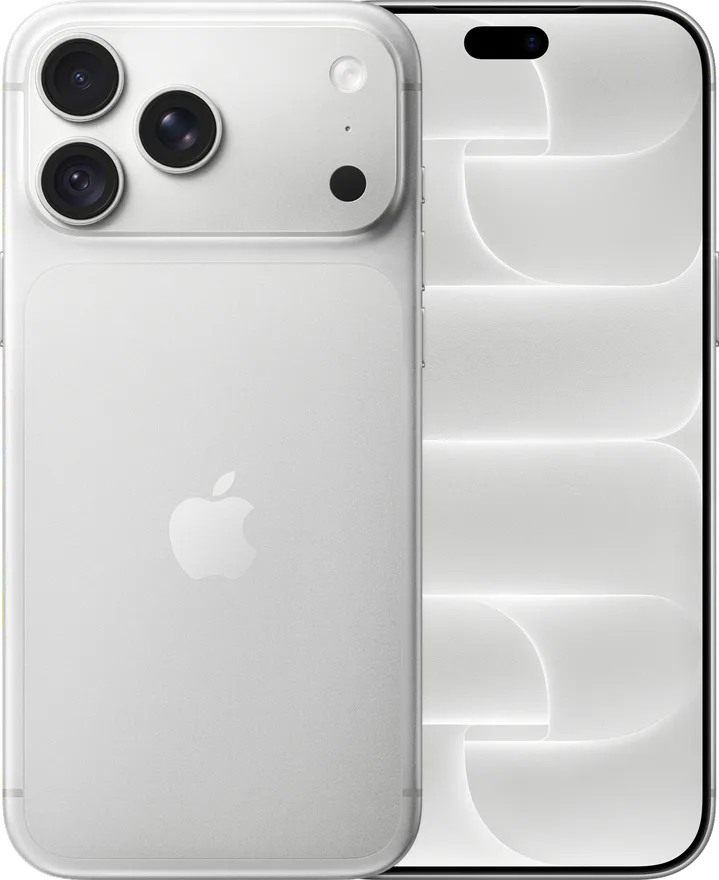
Every year, Apple introduces one feature on the Pro Max that feels like a genuine step forward rather than an incremental spec bump. This year, it is the variable aperture camera. The iPhone 18 Pro Max can physically adjust its main lens aperture between f/1.48 and f/4.0, and the difference it makes to everyday photography is immediately obvious.
This is not the first phone with a variable aperture. Samsung did it with the Galaxy S9, and Honor has used it on the Magic6 and Magic7. But Apple's implementation is the smoothest and most useful version of the feature to date.
Display
The 6.9-inch Super Retina XDR OLED delivers 3,000 nits of peak brightness, making it one of the brightest smartphone displays you can buy. ProMotion runs between 1Hz and 120Hz, and the Always-On display continues to be one of the best implementations in the industry, showing time, widgets, and notifications without noticeably affecting battery life.
Apple has moved to Ceramic Shield 2 for both the front and back glass, which the company claims is tougher than the previous generation. Color accuracy remains class-leading, and the True Tone adjustment works well across different lighting conditions.
Camera
The variable aperture on the 48MP main camera is the headline, and it deserves every bit of attention it gets. At f/1.48, the lens pulls in maximum light for low-light photography and creates natural background blur for portraits. At f/4.0, it sharpens the entire frame for landscape and architectural shots where you want everything in focus.
Apple does not make you think about aperture values if you do not want to. The camera app automatically selects the appropriate aperture based on the scene, and it gets the choice right the vast majority of the time. For users who want manual control, a slider in the camera interface lets you set the aperture yourself.
The 48MP ultrawide captures 120-degree shots with autofocus and macro capability. The 48MP tetraprism telephoto offers 4x optical zoom, which is useful but slightly behind the 5x offered by Samsung and others. Apple compensates with excellent computational photography that makes digital zoom look surprisingly good up to about 10x.
Video capability remains the iPhone's strongest suit. ProRes 4K at 120fps is available directly on the device, and Dolby Vision HDR recording works across all cameras. For video creators, the iPhone 18 Pro Max is still the best phone you can buy.
Apple did not invent the variable aperture camera. It is simply the first company to make one you never have to think about.
On the 48MP main cameraPerformance
The A20 Pro is built on TSMC's 2nm process, making the iPhone 18 Pro Max one of the first phones to ship with a 2nm chip. Real-world performance is fast, though the difference from the A19 Pro is subtle in everyday use. Where the 2nm process pays off most is in power efficiency, which contributes directly to battery life.
Storage options now go up to 2TB, a first for any iPhone. That much local storage is overkill for most users, but for photographers and videographers who shoot ProRes and ProRAW, it is genuinely useful. The NVMe storage is fast enough that file management never feels sluggish even with hundreds of gigabytes of media.
Battery Life
The 5,567mAh battery is Apple's largest ever in an iPhone, and combined with the 2nm chip's efficiency, battery life is excellent. Apple claims 45 hours of video playback, and in real-world mixed use, getting through a full day with 30-40% remaining is typical. Heavy users will make it to bedtime without anxiety.
Charging speed matches Samsung at 60W wired, which takes the phone to 50% in about 15 minutes. MagSafe and Qi2 wireless charging top out at 25W.
Build and Design
At 249 grams, the iPhone 18 Pro Max is the heaviest non-foldable iPhone Apple has made. You notice the weight. It feels substantial and premium, but it is also noticeably heavier than the 214-gram Galaxy S26 Ultra. The aluminum unibody with Ceramic Shield 2 feels solid and looks clean.
Apple has gone eSIM-only globally with this generation, dropping the physical SIM tray entirely. This was inevitable, but it remains an inconvenience for travellers in markets where prepaid eSIM support is inconsistent. The phone measures 163.4 x 78.0 x 8.75 mm and carries an IP68 rating certified to six metres for thirty minutes, which is deeper than the standard IP68 figure most Android flagships quote. Colours are Black, Silver, Glacier and Burgundy.
The Selfie Camera and Video Tools
The front camera has moved to an 18 MP sensor with an f/1.9 aperture and autofocus driven by Focus Pixels. Center Stage keeps subjects framed as people move in and out of shot, which is more useful on a video call than it sounds. Autofocus on a front camera remains rare and it is the reason iPhone selfies hold detail at arm's length where rivals soften.
On the rear, video is still the clearest advantage Apple holds over every Android competitor. The phone records 4K Dolby Vision at 24, 25, 30, 60, 100 and 120fps, and ProRes capture runs up to 4K at 120fps directly to the internal drive. Cinematic mode now works at 4K 60fps. The combination of a 10 Gbps USB-C port with DisplayPort output and up to 2 TB of NVMe storage makes this a phone a working video crew can actually build a day around.
Connectivity and Sensors
Wi-Fi 7 runs with 2x2 MIMO, Bluetooth is at 6.0, and the USB-C port is USB 3 rated at 10 Gbps, twice the throughput of the 5 Gbps port on the Galaxy S26 Ultra. Satellite connectivity covers Emergency SOS, Messages and Find My, and Thread networking is built in for smart home accessories.
The sensor list includes Face ID, a LiDAR scanner, a barometer, a high dynamic range gyroscope, a high-g accelerometer and dual ambient light sensors. The LiDAR unit is doing quiet work every time you shoot a portrait in dim light, measuring depth directly rather than inferring it from parallax.
One detail worth knowing: the modem differs by region. US units use a Qualcomm Snapdragon X80, while units elsewhere use Apple's own C2 modem. Apple's published specification page does not list the C2 for the Pro Max, so treat regional modem performance comparisons with caution until independent testing settles it.
Battery Figures, Honestly Stated
Apple does not publish a milliamp-hour rating for any iPhone. The 5,567 mAh figure comes from teardown and regulatory documentation for the eSIM model, which is the only model sold in the United States. Apple's own claim is up to 45 hours of video playback, and that is the number the company stands behind.
In mixed real-world use, ending a day with 30 to 40 percent remaining is typical, which is a meaningfully better result than the Galaxy S26 Ultra manages on its 5,000 mAh cell. The 2 nm A20 Pro is doing most of that work. Charging reaches 50 percent in roughly 15 minutes at 60W, and MagSafe and Qi2 wireless both cap at 25W.
Price and Value
The iPhone 18 Pro Max starts at $1,299 for 256 GB and climbs through 512 GB and 1 TB to a 2 TB configuration. Every tier carries 12 GB of RAM, so the only thing extra money buys is storage.
Against the $1,399.99 Galaxy S26 Ultra it is the cheaper phone, which is not a sentence anyone expected to write about a Pro Max. Against the $1,099 Pixel 11 Pro it is a $200 premium for better video, a brighter ceiling on sustained performance and the variable aperture. The honest framing is that the camera hardware, not the price, is the reason to choose it.
Specifications in Full
| Display | 6.9-inch Super Retina XDR OLED, 2868 x 1320 (460 ppi), adaptive 1-120Hz ProMotion, Always-On, 3,000 nits peak outdoor |
|---|---|
| Chipset | Apple A20 Pro (2 nm), 6-core CPU, 7-core GPU with Neural Accelerators |
| Modem | Qualcomm Snapdragon X80 (US) or Apple C2 (elsewhere) |
| Memory | 12 GB RAM, 256 GB to 2 TB NVMe |
| Rear cameras | 48 MP f/1.48-4.0 24mm wide with sensor-shift OIS, 48 MP f/2.2 13mm ultrawide, 48 MP f/2.8 100mm tetraprism 4x telephoto |
| Front camera | 18 MP f/1.9 with autofocus and Center Stage |
| Video | 4K Dolby Vision up to 120fps, ProRes up to 4K at 120fps, Cinematic mode 4K at 60fps |
| Battery | 5,567 mAh (eSIM model), up to 45 hours video playback, 60W wired, 25W MagSafe and Qi2 |
| Build | Aluminium unibody, Ceramic Shield 2 front and back, IP68 to 6 m for 30 min, 163.4 x 78.0 x 8.75 mm, 249 g |
| Software | iOS 27 |
| Connectivity | Wi-Fi 7 with 2x2 MIMO, Bluetooth 6.0, NFC, UWB, Thread, satellite, USB-C 3 (10 Gbps) with DisplayPort |
| Price | $1,299 for 256 GB |
Who Should Buy the iPhone 18 Pro Max
Buy it if you shoot video professionally or semi-professionally, if you want the best still camera Apple has built, or if you are already inside the ecosystem and plan to stay. The variable aperture is the first iPhone camera change in several years that produces visibly different photographs rather than marginally cleaner ones.
Skip it if the weight bothers you. At 249 g this is a genuinely heavy phone, 45 g more than the Pixel 11 Pro, and nobody gets used to that as quickly as they expect. Skip it too if you want 5x optical reach, because the 4x tetraprism gives up ground to both Samsung and Google at long range.
Alternatives Worth Considering
The Galaxy S26 Ultra counters with a 200 MP sensor and a longer 5x periscope, at the cost of $100 more and a smaller battery. The Pixel 11 Pro is the better value and the better one-handed phone. If photography is the entire reason you are shopping at this level, the Xiaomi 17 Ultra and its 1-inch sensor outguns everything here. Our S26 Ultra versus iPhone 18 Pro Max comparison breaks the two flagships down line by line.
The Verdict
The variable aperture camera alone makes the iPhone 18 Pro Max worth the upgrade for anyone who takes photography seriously. It is the most meaningful camera improvement Apple has made in years. Combined with the 2nm chip, 2TB storage option, and excellent battery life, this is a complete flagship that justifies its $1,299 price. The weight is the only real trade-off.