 PhoneCodex
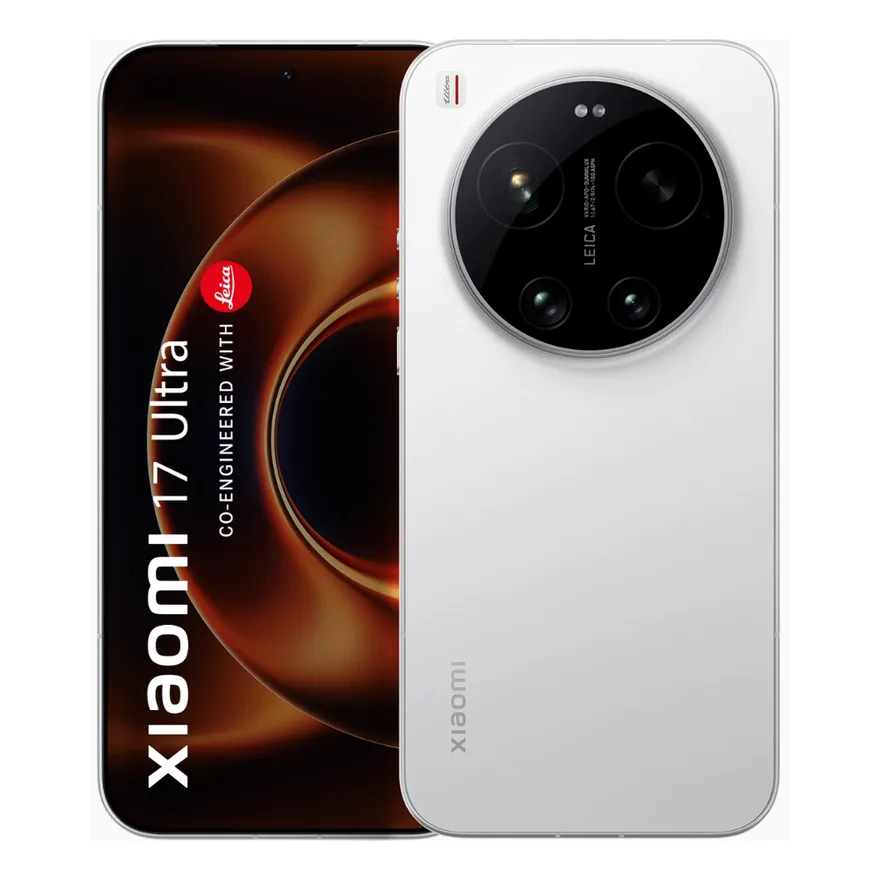
Xiaomi has been chasing the title of "best camera phone" for years, and the 17 Ultra is the strongest bid the company has ever made. A 1-inch main sensor, a 200MP periscope telephoto with variable aperture, and Leica optics on every lens. This is a phone built by people who think about photography first and everything else second.
The result is a camera system that genuinely competes with dedicated compact cameras in certain conditions.
Camera
The 50MP main camera uses a 1/1.0-inch sensor, the largest available in any smartphone. The physical size advantage is significant: larger pixels capture more light, which means less noise, better dynamic range, and more natural depth of field. The f/1.67 Leica-branded lens is sharp across the frame, and optical image stabilization keeps handheld shots steady.
The 200MP periscope telephoto is the showpiece. At 100mm focal length with 4.3x optical zoom, it captures distant subjects with remarkable clarity. The variable aperture (f/2.4 to f/2.96) gives it flexibility between maximum sharpness and maximum light gathering. For portrait photography at telephoto distances, the results are outstanding.
The 50MP ultrawide with a 14mm focal length and 115-degree field of view rounds out the system. All three cameras produce images with Leica's distinctive color science, which leans toward warm, slightly desaturated tones that many photographers prefer over the punchy, oversaturated look that most phone cameras default to.
The Mechanical Zoom Ring
Xiaomi offers an optional edition with a physical zoom ring around the camera module. Rotating the ring smoothly transitions between focal lengths, mimicking the experience of using a dedicated camera lens. It is not a gimmick. For photographers who are used to shooting with real cameras, the tactile feedback of a physical zoom control makes a meaningful difference to the shooting experience.
The standard edition works with the usual pinch-to-zoom gesture. Both produce identical image quality.
This is a phone built by people who thought about photography first and everything else second. It shows in both directions.
On the Xiaomi 17 Ultra's prioritiesDisplay and Performance
The 6.9-inch LTPO AMOLED hits 3,500 nits peak brightness and runs at 120Hz. The Xiaomi Shield Glass 3.0 provides drop protection. It is a bright, sharp, responsive display that does everything you need, though the 120Hz maximum feels conservative compared to the 185Hz on the OnePlus 16.
The Snapdragon 8 Elite Gen 5 powers the device, and Xiaomi pairs it with 16GB of RAM and 512GB of UFS 4.1 storage. Performance is flagship-grade across the board. HyperOS 3 on Android 16 runs smoothly, though Xiaomi's software is busier than some competitors, with more pre-installed apps and notification prompts than purists would like.
Battery and Build
The 6,000mAh silicon-carbon battery is large enough for a full day of heavy use, including extensive camera shooting. The 90W wired charging refills the battery in about 35 minutes. Wireless charging at 50W and 10W reverse wireless charging are both supported.
The phone has a silicon polymer back that gives it a distinctive texture and IP66, IP68 and IP69 ratings for water and dust resistance. The IP69 certification covers high-pressure, high-temperature water jets, which almost no other phone carries. At 218 grams and 162.9 x 77.6 x 8.3 mm, it is on the heavier side, but the weight distribution is balanced.
The Display Compromise Nobody Mentions
The 6.9-inch panel is bright and responsive, but its resolution deserves a closer look than it usually gets. At 1200 x 2608 pixels it works out to roughly 416 pixels per inch, which is lower than the Galaxy S26 Ultra at 500 ppi, the Pixel 11 Pro at 495 ppi and the iPhone 18 Pro Max at 460 ppi.
In practice you will not see individual pixels at normal viewing distance. You may notice slightly softer edges on small text compared with the Samsung. For a phone that costs this much and is explicitly sold on image quality, it is a strange place to save money, and it is the clearest sign of where Xiaomi's engineering budget went.
The 120Hz ceiling is the second compromise. It is perfectly smooth, but on a phone at this price the OnePlus 16's 185Hz panel makes the Xiaomi feel a generation behind in a way that has nothing to do with how it performs.
Video, Selfies and the Rest of the Camera System
The front camera is a 50 MP f/2.2 unit at a 21mm equivalent, wide enough for a two-person shot without stretching. Autofocus is contrast-detect rather than phase-detect, so it hunts slightly more than the Pixel's Dual Pixel front camera in dim rooms.
Video records at 8K 30fps and 4K 120fps with Dolby Vision support throughout. Laser autofocus assists the rear system, which makes a visible difference when you are shooting close-up subjects in low light where contrast detection struggles. There is also a dual LED flash and, unusually for 2026, an infrared blaster for controlling televisions and air conditioners.
Battery and Thermals Under Camera Load
Camera-heavy phones punish their batteries in a specific way. Keeping a 1-inch sensor live, running laser autofocus and processing 200 MP captures draws far more power than scrolling or video playback, and it is the workload that exposes a weak battery fastest.
The 6,000 mAh silicon-carbon cell handles it. A full day of deliberate shooting, including a few hundred stills and some 4K footage, still ends with charge to spare, which is not something the 5,000 mAh Galaxy S26 Ultra manages under the same treatment. The 90W HyperCharge refill takes about 35 minutes, 50W wireless is available, and 10W reverse wireless will top up earbuds.
Sustained 8K recording warms the frame noticeably, as it does on every phone, but the silicon polymer back disperses heat better than glass and the phone does not throttle its capture resolution partway through a clip the way thinner rivals sometimes do.
Software and Support
HyperOS 3 runs on Android 16. Xiaomi commits to five years of OS updates and six years of security patches, which is a strong figure and second only to Google's seven-year window among the phones in this class.
The software itself is the weakest part of the package. It is fast and visually coherent, but there are more pre-installed applications than on any other flagship here and more prompts asking you to enable services you did not request. Everything can be switched off, and most of it can be uninstalled, but the first hour of ownership is spent tidying rather than using.
Price and Availability
The Xiaomi 17 Ultra launched in China in December 2025 and reached global and Indian markets in March 2026 at 139,999 rupees, which converts to roughly $1,580. That makes it the most expensive phone in this group by a clear margin, ahead of the $1,399.99 Galaxy S26 Ultra and the $1,299 iPhone 18 Pro Max.
The single configuration is 16 GB of RAM with 512 GB of UFS 4.1 storage, so there is no cheaper entry point and no cheaper storage tier to drop down to. The Leica mechanical zoom ring edition is sold separately and costs more again.
Specifications in Full
| Display | 6.9-inch LTPO AMOLED, 1200 x 2608 (416 ppi), 120Hz, 3,500 nits peak, Xiaomi Shield Glass 3.0 |
|---|---|
| Chipset | Snapdragon 8 Elite Gen 5 (3 nm), Adreno 840 GPU |
| CPU | Octa-core, 2 x 4.6 GHz Oryon V3 Phoenix L + 6 x 3.62 GHz Oryon V3 Phoenix M |
| Memory | 16 GB RAM, 512 GB UFS 4.1 |
| Rear cameras | 50 MP f/1.67 23mm wide with 1-inch sensor and OIS, 200 MP f/2.4-2.96 100mm periscope with 4.3x optical zoom and OIS, 50 MP f/2.2 14mm 115-degree ultrawide |
| Front camera | 50 MP f/2.2 21mm |
| Video | 8K at 30fps, 4K at 120fps, Dolby Vision |
| Battery | 6,000 mAh silicon-carbon, 90W HyperCharge wired, 50W wireless, 10W reverse |
| Build | Silicon polymer back, aluminium frame, IP66, IP68 and IP69, 162.9 x 77.6 x 8.3 mm, 218 g |
| Software | Android 16 with HyperOS 3, five years of OS updates and six years of security patches |
| Connectivity | Wi-Fi 7, Bluetooth 6.0, NFC, IR blaster, USB-C 3.2 Gen 2 with DisplayPort |
| Price | 139,999 rupees in India, around $1,580 converted |
Who Should Buy the Xiaomi 17 Ultra
Buy it if photography is the reason you are buying a phone at all. The 1-inch main sensor and the 200 MP periscope are not marginal upgrades over the competition; they produce images with depth and reach that no other phone here can match. The mechanical zoom ring edition is worth the premium if you already shoot with a real camera.
Skip it if you want the sharpest display, the cleanest software or the best value. At roughly $1,580 for a single 512 GB configuration, this is a specialist tool priced accordingly.
Alternatives Worth Considering
The Galaxy S26 Ultra gives up sensor size but gains a sharper screen, proper global support and a lower price. The Pixel 11 Pro takes better photographs than it has any right to with far less hardware, and costs less than $1,100. If you want the Xiaomi experience without the Ultra premium, the standard Xiaomi 17 covers most of the same ground, and we compare it with OnePlus in our OnePlus 16 versus Xiaomi 17 comparison.
The Verdict
The Xiaomi 17 Ultra is the best phone for photography, period. The 1-inch main sensor and 200MP periscope telephoto produce images that rival dedicated cameras, and Leica's color science gives photos a distinctive, professional look. The mechanical zoom ring edition is a must for serious photographers. The price is high and the software is not the cleanest, but if camera quality is your top priority, nothing else in the smartphone market comes close.